Preservation deep plane facelift
What is a preservation deep plane facelift?
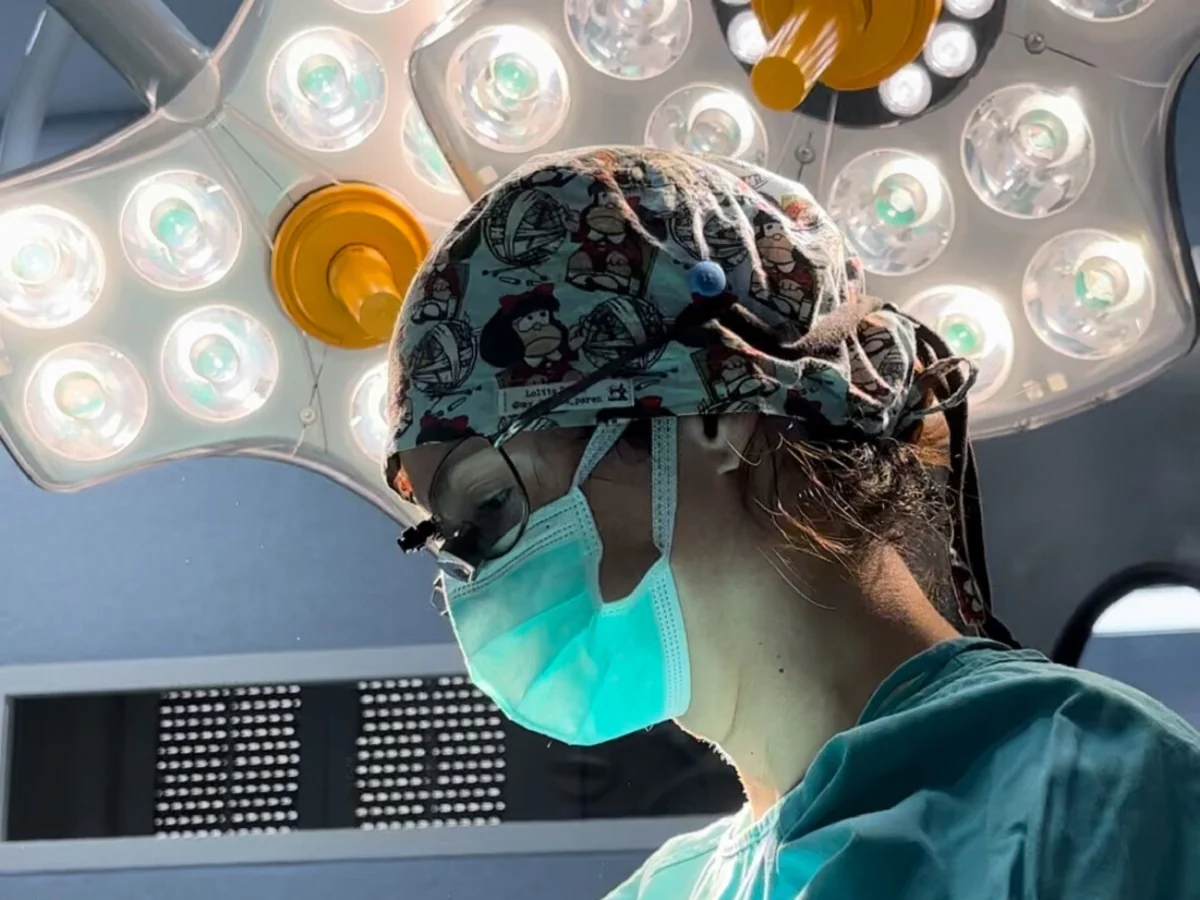
It can be described as surgery that repositions the deep tissues of the face and neck that have descended over time, returning them to a higher, more defined and more harmonious position without relying on excessive skin tension, as older subcutaneous techniques did.
The deep plane facelift works on the deep structures of the face. Through selective release of specific retaining ligaments, it allows the superficial musculoaponeurotic system (SMAS), the fat compartments and the overlying skin to be mobilized and repositioned together, as a single unit.
This makes it possible to treat facial aging at its structural origin: restoring the position of the malar and cheek tissues, softening tissue descent around the mouth, redefining the jawline and, when combined with appropriate treatment of the neck, improving the neck contour as well.
In my approach I also apply preservation principles, limiting subcutaneous dissection and maintaining, whenever possible, the natural connections between the skin and the deep planes. The goal is effective tissue mobilization with minimal traction on the skin, preserving its blood supply and quality as much as possible.
The result we are looking for is not a pulled face, but a face that regains definition and freshness while keeping its proportions, its expression and its identity.
What it is and what it is not
This is one of the first questions almost every patient asks, and it is worth answering before discussing dates, recovery or surgery.
What it is
- Surgery that works at depth. It addresses the SMAS and the tissues that have descended with age, rather than relying solely on skin tension for the result.
- A repositioning procedure. The aim is to return the tissues to a higher, more defined and more harmonious position, so that the skin does not carry the main tension of the surgery.
- Treatment of the face and neck as a single unit. Defining the jawline and improving the cervicomental angle requires assessing both the lower third of the face and the deep structures of the neck. Depending on the patient, this may involve treating the platysma, the different fat compartments and, in selected cases, deep structures such as the submandibular glands (I explain it here, in Spanish).
- Surgery based on preservation principles. I aim to keep subcutaneous dissection to a minimum and preserve the natural connections between the skin and the deep tissues. This approach is intended to reduce surgical trauma to the skin and to preserve vascular and lymphatic structures and fibrous septa whenever possible.
- A way of seeking a natural, long-lasting result. We treat the structures responsible for facial descent to restore definition and freshness without changing the expression or identity of the face.
What it is not
- It is not a skin stretch. The skin follows the repositioning of the deep tissues, but it should not bear the main tension of the surgery. Excessive skin tension can lead to less natural results and poorer-quality scars.
- It is not simply a zone-by-zone treatment. The face ages as a whole. That is why I assess the face, the eye area and the neck globally, even if we then decide to operate only on the areas that really need it. The goal is to avoid an imbalance between rejuvenated areas and others that still show signs of aging (explanatory video, in Spanish).
- It is not scarless surgery. A facelift requires incisions. Careful planning of those incisions and meticulous closure are part of the operation, so that once mature the scars are as discreet as possible, and in many cases barely noticeable.
- It is not risk-free surgery. Like any surgical procedure, it carries potential complications. Hematoma is one of the best-known early complications of facelift surgery, and it is part of the information we explain in detail before surgery.
- It does not deliver a final result the next day. The face needs time for the swelling to settle, for healing, and for the tissues to adapt to their new position. Changes become visible gradually over the first few weeks, but I consider three to six months a reasonable first point at which to start assessing the result with some perspective, with the final assessment at one year.
The process, step by step
From your first contact with our patient care team to your medical discharge, this is what you can expect as a patient.
Initial consultation, in person or online
Everything starts with an assessment of your case: what concerns you, what can realistically be achieved and with which technique. The full procedure is explained here, including the risks, so that you can make a fully informed decision.
In person in Córdoba and Madrid Also online
The surgery
I perform the entire surgery personally, assisted by a medical team with extensive experience in facial surgery. When the case calls for it, it is combined in the same operation with other procedures, such as Cirugía de la Mirada® or the Contour Lift for the brows.
Córdoba Madrid
Two days in hospital
During the hospital stay, the nursing team and I closely monitor the first postoperative hours. These are the hours that require the most support to reassure patients and their families, the hours in which rest matters most, and the most important hours for monitoring progress.
2 days
Two to three weeks of recovery
This is the usual time before patients can return to their daily routine. By preserving the lymphatic vessels, minimizing the risk of bleeding and reducing skin undermining, we keep swelling and bruising lower than with other techniques, which shortens recovery. Even so, a recovery of less than two weeks is unrealistic. It is a figure patients have sometimes heard from other practitioners and which, although it can happen when everything goes very smoothly, we never set as a goal. When patients are promised a short recovery and it does not turn out that way, the frustration they feel is entirely understandable.
2 to 3 weeks
Follow-up for twelve months
Care does not end when you leave the hospital: we follow up with each patient for twelve months, which is when the result has settled and can be properly evaluated.
Up to 12 months
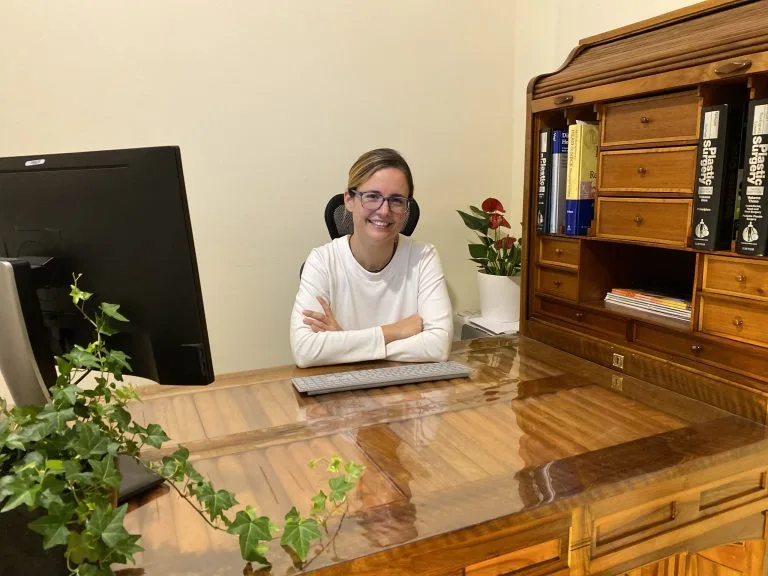
The first consultation can take place in person in Córdoba or Madrid, or by video call if you live far away.
Why the result is evaluated at twelve months
After surgery, the face goes through several phases: initial swelling, progressive tissue recovery and, later, a process of adaptation and scar maturation.
That is why the result should not be judged in the first few weeks. Between three and six months, most of the swelling has subsided and the tissues have settled considerably, allowing a first evaluation of the result with greater perspective.
Even so, the process does not end there. Scars and tissues continue to mature over the following months, and the final assessment of the result is made at one year.
I explain it on Instagram
The same questions, answered on my account @dra.falguera.bestyou (videos in Spanish).
Is the postoperative period painful?
What my most recent patient told me about pain after a preservation deep plane facelift.
August 20, 2026
Let's talk about complications
Hematoma is the most common complication of facelift surgery. Why it is explained before surgery, not after.
September 4, 2026
Can you spot the scars?
A male facelift two months after surgery, with a beard and short hair as an added challenge.
August 28, 2026
Result at three months
Preservation face and neck lift, with a Contour Lift for the brows, three months after surgery.
July 24, 2026
SMAS, deep plane and preservation facelift: what is the difference?
Facelift surgery has evolved considerably over time.
The earliest techniques focused mainly on removing and tightening excess skin. SMAS-based approaches came next, making it possible to work on deeper structures and improve the stability of the result.
The next step was the development of the deep plane facelift, based on selective release of the retaining ligaments and composite mobilization of the deep facial tissues, so that the result no longer depends solely on skin tension.
Building on this philosophy, preservation techniques were later developed. They aim to limit subcutaneous dissection and to respect, as far as possible, certain anatomical connections between the skin and the deep planes.
The purpose of this evolution is not simply to make surgery "deeper", but to achieve a more anatomical repositioning of the tissues, reduce traction on the skin and favor a recovery that is as respectful as possible of the facial structures.
Other frequently asked questions
Like any surgery, a facelift carries risks and potential complications. One of the best known in the early postoperative period is hematoma.
Nobody likes complications, neither patients nor surgeons, but they are part of responsible medical information. That is why, before surgery, I explain what can happen, how we try to prevent it and how we would act if any problem arose.
For me, informing patients about risks is part of the same commitment as supporting them throughout the entire process.
The incisions are usually placed in strategic areas around the ear: in the temporal region or along the hairline, in the preauricular crease, around the earlobe and behind the ear. When certain structures of the neck need to be treated, a small incision under the chin may be added.
Because the deep tissues are repositioned, we aim to close the skin with as little tension as possible. Incision placement, planning and closure technique are essential to achieving scars that are as discreet as possible once mature.
This is especially important in the male facelift, where the beard, the hairline and short hairstyles call for specific considerations when planning the incisions.
A facelift can address different signs of facial aging: descent of the midface tissues, loss of jawline definition, laxity of the lower face and changes in the neck.
It can also improve certain folds and transitions, such as the nasolabial folds, although the degree of improvement depends on each patient's anatomy and pattern of aging.
The philosophy is not simply to stretch the skin or remove volume, but to reposition the tissues and restore more harmonious proportions.
Both share a fundamental philosophy: working at depth, releasing retaining structures when necessary and repositioning the tissues so that the result does not depend mainly on skin tension.
The difference lies in certain aspects of the dissection and in how much of the connection between the different planes is preserved. In a preservation approach, I try to limit subcutaneous dissection as much as possible and to preserve anatomical structures whenever this is compatible with the repositioning each patient needs.
The goal is surgery that is effective on the deep tissues while reducing trauma to the skin as far as possible and favoring a gentler recovery.
I do not think it is accurate to speak of a technique that is universally "better" for every patient.
There are different ways of working with the SMAS, with varying degrees of dissection, mobilization and management of the retaining ligaments. Deep plane and preservation approaches allow deep, extensive tissue mobilization in suitable patients, but the indication must be tailored to the anatomy, the degree of aging and the desired result.
What matters is not just the name of the technique, but knowing which structures need treatment and choosing the approach that will correct them most precisely.
Yes. In many patients, aging does not affect only the lower face or the neck.
When indicated, a facelift can be combined in the same operation with procedures on the eye area, such as blepharoplasty or other periorbital rejuvenation techniques, as well as with fat grafting or other complementary procedures.
Fillers may also play a role in selected cases, although after the tissues have been repositioned it is worth reassessing what volume deficit actually remains before deciding whether any needs to be added.

Written and reviewed by
Dr. Mabel Falguera Uceda
Oral and maxillofacial surgeon specializing in facial aesthetic surgery. Trained at the University of Navarra, Hospital 12 de Octubre in Madrid and Chang Gung Hospital in Taiwan. Facial aesthetic surgeon and director of Instituto Facial in Córdoba.
Oral and Maxillofacial Surgery - Hospital 12 de Octubre. AO Fellow - Chang Gung Hospital, Taiwan. Master's in Aesthetic Medicine - Complutense University of Madrid (UCM). Migraine Surgery Society